
Thin
Zero drop and low thickness so the foot feels the ground.
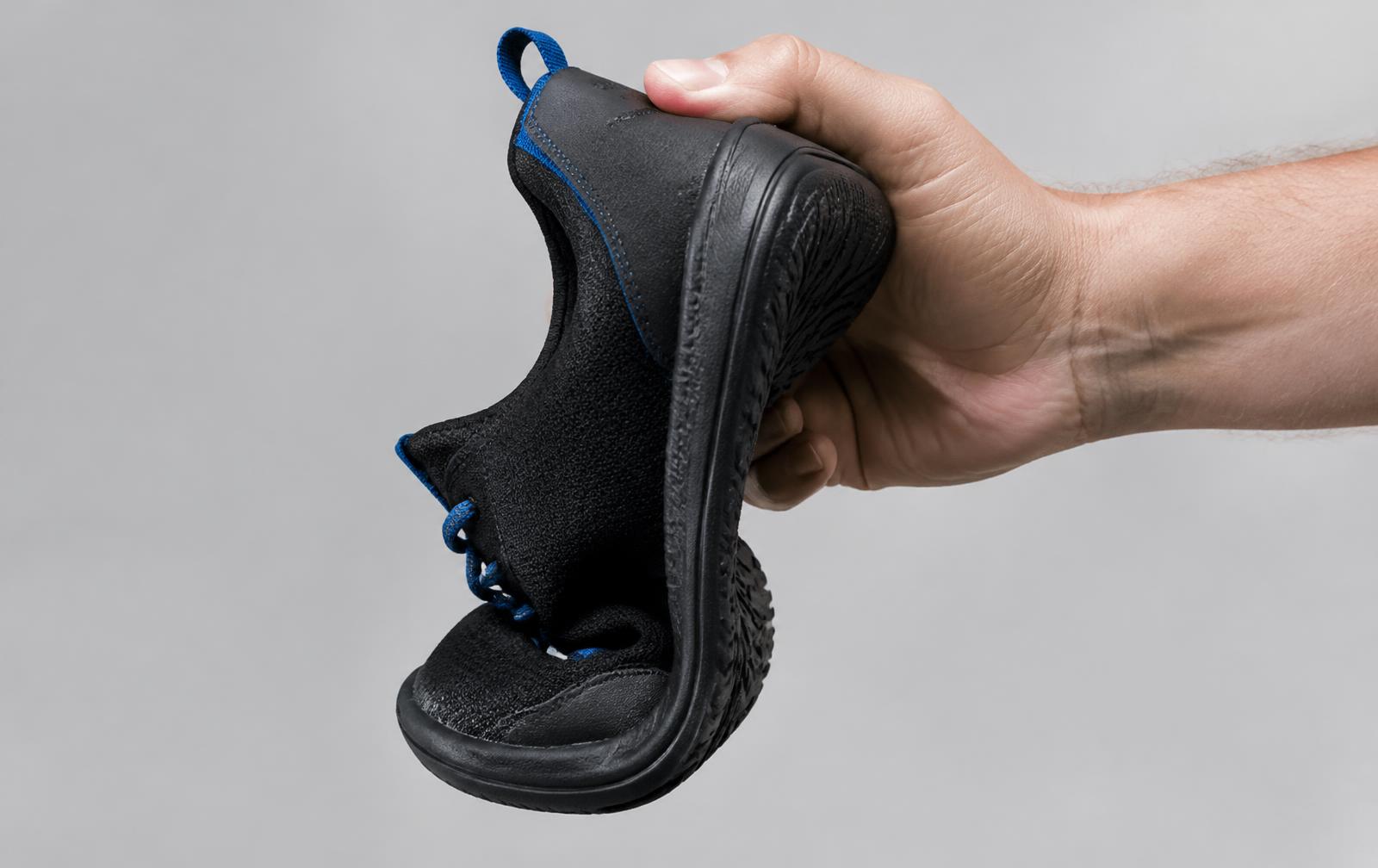
Materials for barefoot footwear
Very soft, flexible compounds for thin soles with abrasion resistance: thermoplastic rubber for sole injection and PVC for direct injection onto the upper.
01 — The challenge
Zero drop and low thickness so the foot feels the ground.
Low hardness with longitudinal and torsional flexibility.
Withstands abrasion and repeated flexing without cracking.
02 — Kids' footwear
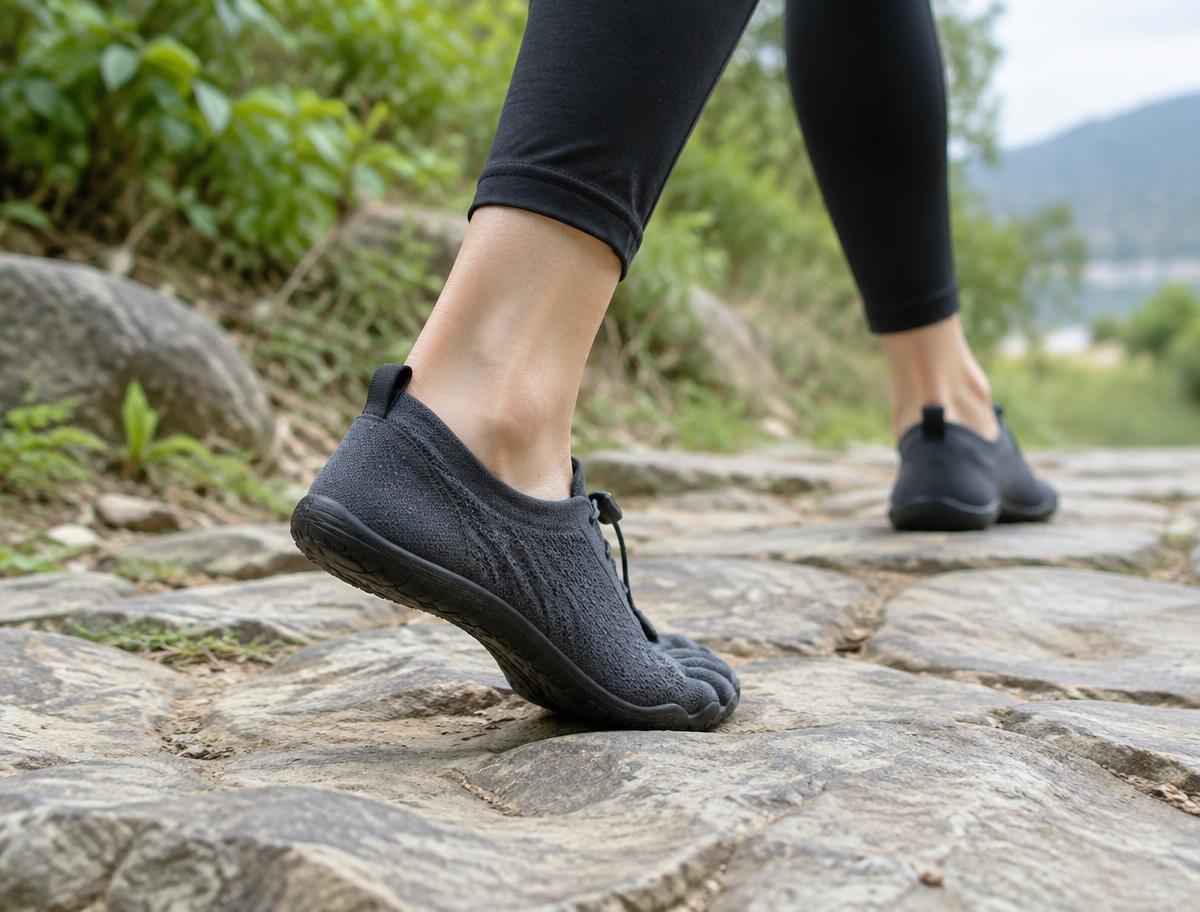
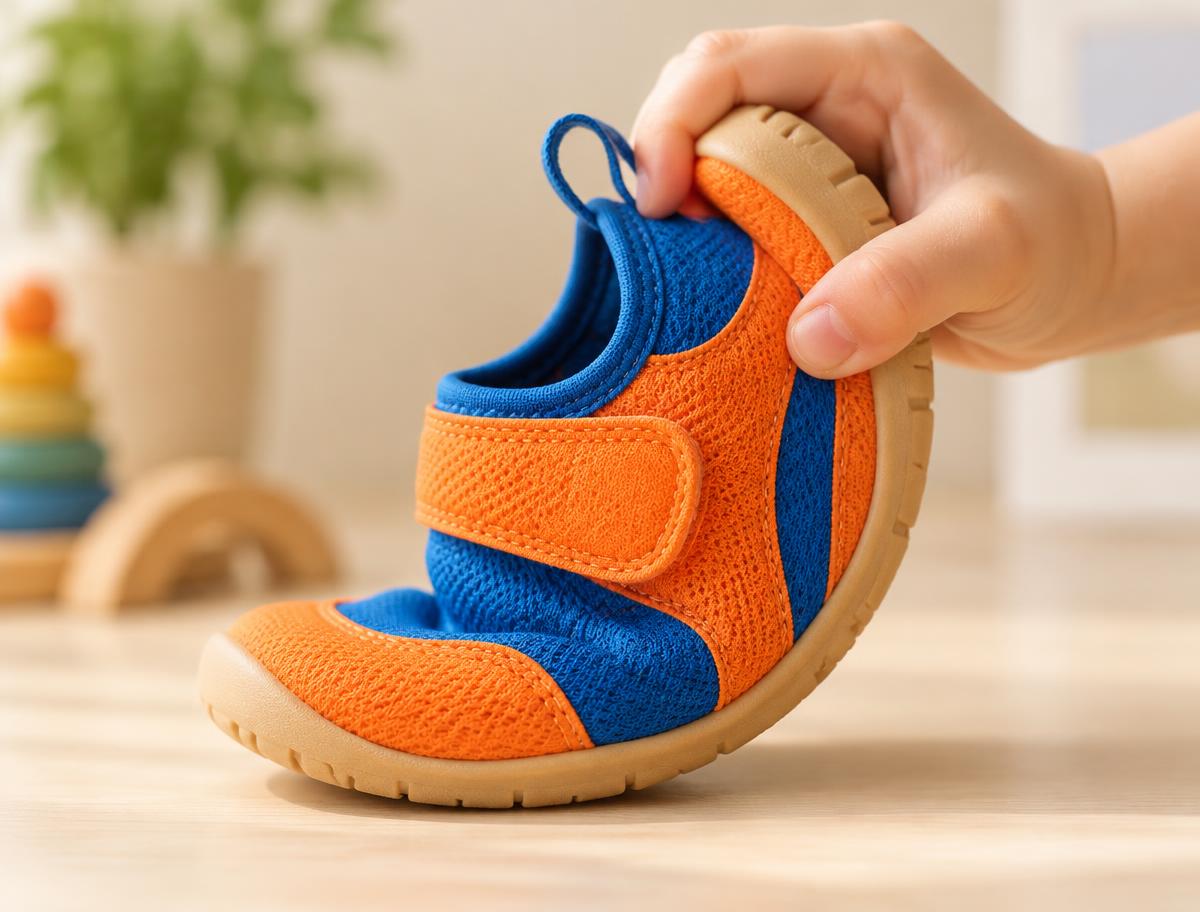
A child's foot is still developing. A thin, soft, flexible barefoot sole lets it move, support itself and work as it would barefoot. That's why this range is especially suited to kids' footwear: it respects the natural growth of the foot.
The shoe follows the foot; it doesn't constrain it.
The sole flexes with the foot in every direction, without stiffening it.
Zero drop: heel and forefoot at the same height, without altering posture.
Thin sole that transmits the ground when walking, like going barefoot.
TR has a density of 0.91 g/cm³: light soles that don't tire.
Abrasion resistance for intense everyday use.
REACH compliant. The PVC is formulated without phthalates.
For the manufacturer
03 — Materials
Two injection technologies for two ways of making a barefoot sole.
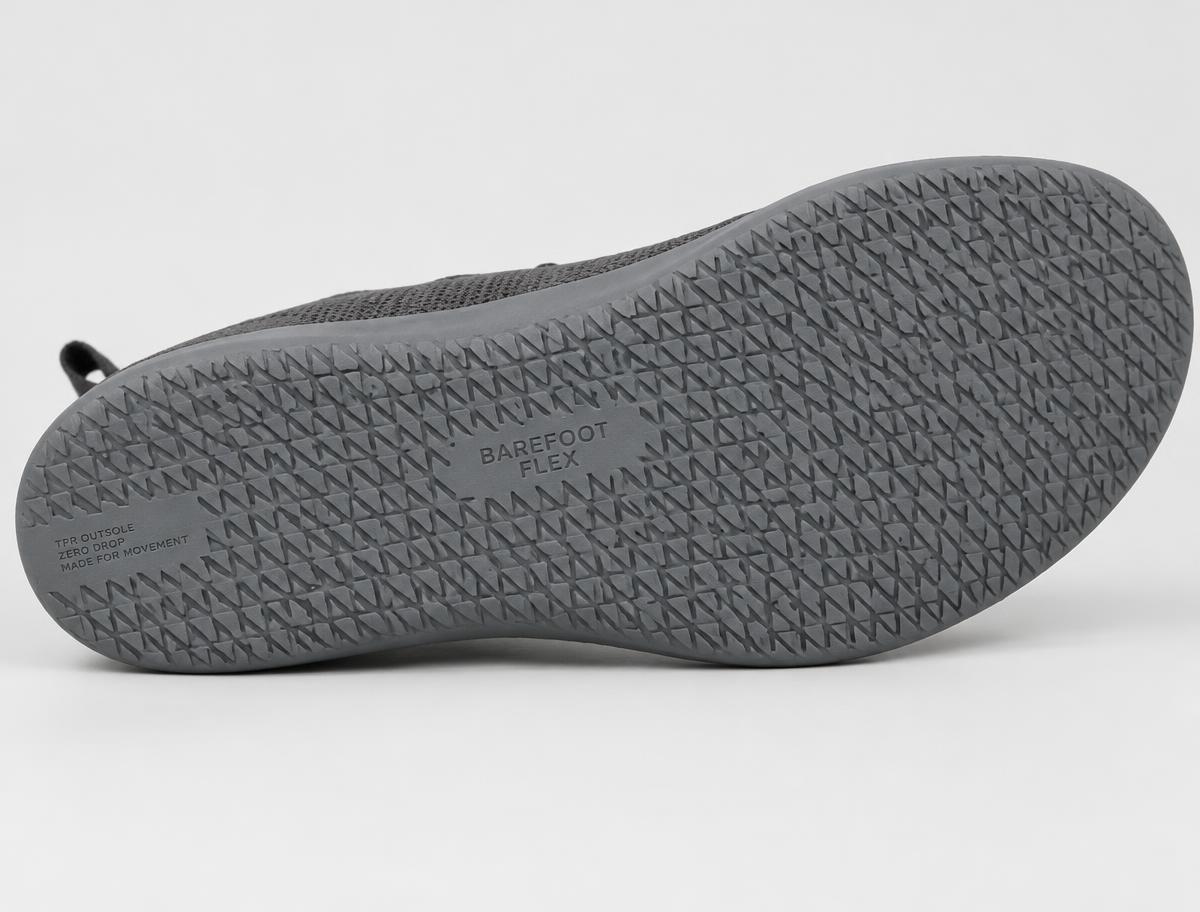
SBS-based compound for sole injection; the sole is then cemented or stitched to the upper. Very soft touch and high flexibility with good abrasion resistance. Opaque, translucent or rubber-effect finishes. 100% recyclable.
Ideal for
Thin barefoot soles for casual, light outdoor and kids' footwear assembled by cementing or stitching.
Process
Sole injected in a mould → cemented or stitched to the upper.
04 — Properties
Low hardness for a natural, comfortable step.
The sole follows the foot's movement in every direction.
Low thickness doesn't mean short service life.
Good traction on varied surfaces.
Consistent machine behaviour batch after batch.
Hardness, colour and finish formulated for your model.
05 — Technical data
| Property | TR | PVC |
|---|
Note: These data should be considered indicative values for users. They refer to tests carried out in our laboratory on test specimens, and do not guarantee that these values fully or partly match those obtained by other laboratories, even when the same analysis methods are used.
06 — How we work
Tell us the model, process, hardness and finish you need.
We tune the compound in our laboratory.
Trials under your real injection conditions.
We check results and fine-tune as needed.
Stable supply and ongoing technical support.
07 — FAQ
It depends on your process: if you inject the sole and then cement or stitch it, TR; if you use direct injection onto the upper, PVC. We advise you based on your machinery.
It depends on thickness, use and the feel you want. We formulate the hardness for your model.
Yes. We send samples so you can test them under your real injection conditions.
Custom colour. TR: opaque, translucent or rubber effect. PVC: opaque, rubber effect.
TR is 100% recyclable and PVC is phthalate-free and REACH compliant.
08 — Contact
Process, hardness and finish. We'll propose the compound and send samples.